
An Indian-origin couple currently serving jail terms in Australia for enslaving a woman for eight years has been slapped with a fresh penalty and ordered to forfeit the proceeds from the sale of their home, police said.

Stock market benchmark indices Sensex and Nifty surged in early trading session on Tuesday after India and the US agreed to a trade deal under which Washington will bring down the reciprocal tariff on Indian goods to 18 per cent from current 25 per cent.

The strong domestic flow offset selling by foreign portfolio investors who pulled out $23.3 billion (Rs 2.03 trillion) from domestic equity markets in CY25.

From the 30-Sensex firms, HDFC Bank, Infosys, HCL Tech, Bajaj Finance, Tata Consultancy Services and Reliance Industries were among the biggest laggards. In contrast, Bharat Electronics, Hindustan Unilever, Tata Steel and UltraTech Cement were among the gainers.

Foreign investors have injected close to Rs 33,700 crore in domestic equities in this month so far primarily due to interest rate cut in the US and resilience of the Indian market. This also marks the second highest inflow in a month in this year so far, the last one being in March, when Foreign Portfolio Investors (FPIs) infused Rs 35,100 crore, data with the depositories showed. Going ahead, the trend of FPIs buying is likely to continue in the coming days, V K Vijayakumar, Chief Investment Strategist, Geojit Financial Services, said.

Goldman Sachs forecasts real GDP growth to accelerate to 7.9 per cent in FY17 from a projected 7.5 per cent in FY16.

The Supreme Court has stayed a recent University Grants Commission (UGC) regulation following petitions arguing that the Commission's definition of caste-based discrimination was too narrow, excluding certain categories from institutional protection.

Jefferies has downgraded Indian information technology (IT) companies Infosys, HCLTech, and Mphasis to "hold"; LTI MindTree, Tata Consultancy Services (TCS) and Hexaware to "underperform", citing artificial intelligence (AI)-related concerns. Coforge, Sagility and IKS, however, still remain its top picks.

Foreign investors withdrew Rs 10,355 crore from the country's equity markets in the last four trading sessions this month due to sweeping tariffs imposed by the US on most nations, including India. The outflow occurred after a net investment of Rs 30,927 crore in the six trading sessions from March 21 to March 28. This infusion helped reduce the overall outflow for March to Rs 3,973 crore, according to data from the depositories.

'If nominal growth improves and earnings pick up, Indian stock markets could see a rally next year.'

Foreign investors have adopted a cautious stance and infused Rs 7,320 crore in the Indian equities in August owing to high valuation of stocks and the unwinding of the Yen carry trade after Bank of Japan raised interest rates. This investment was way lower than Rs 32,365 crore in July and Rs 26,565 crore in June, according to data with the depositories. While September is likely to see continued interest from FPIs, the flows would be shaped by a combination of domestic political stability, economic indicators, global interest rate movements, market valuations, sectoral preferences, and the attractiveness of the debt market, Vipul Bhowar, Director Listed Investments, Waterfield Advisors, said.

They own 27.5% in top 75 listed firms; investments bounce back after falling two straight quarters

The Indian government is set to launch a nationwide HPV vaccination program targeting 14-year-old girls to prevent cervical cancer, utilizing a single-dose vaccine and aiming for equitable access across socio-economic groups.

Apart from sustaining your portfolio when the domestic market is faring well, global diversification also safeguards it against currency risk.

'Defence, capital goods, engineering, capital market-related stocks, autos, and cement sectors are my bullish bets for Samvat 2082.'

From the 30-Sensex firms, Bharat Electronics, Power Grid, Tata Motors Passenger Vehicles, Asian Paints, Reliance Industries, and Bajaj Finserv were among the biggest gainers. However, HCL Tech, Kotak Mahindra Bank, ICICI Bank, and Sun Pharma were the laggards.

The global COVID-19 situation, rollout of vaccines, geopolitical trends, Union Budget and economic recovery would be the major factors driving investor sentiments in 2021 after a tumultuous year which saw both 'the worst of times and the best of times' for the stock market, said analysts. What a year 2020 turned out to be! From witnessing gigantic losses to record-shattering gains, investors went on a roller-coaster ride amid the coronavirus pandemic and massive stimulus measures. Markets closed 2020 with remarkable gains of around 16 per cent, but will the winning ways continue in 2021 as well?

India's third-largest telecom operator Vodafone Idea (Vi) has secured a 10-year breather on adjusted gross revenue (AGR) payments from the Department of Telecommunications (DoT). This is expected to ease pressure on its balance sheet and enable the company to raise bank debt for capital expenditure.

Foreign investors turned net sellers in October, withdrawing shares worth Rs 58,711 crore in the month so far owing to escalating conflict between Israel and Iran, a sharp rise in crude oil prices, and the strong performance of the Chinese market. The outflow came following a nine-month high investment of Rs 57,724 crore in September. Since June, Foreign Portfolio Investors (FPIs) have consistently bought equities, after withdrawing Rs 34,252 crore in April-May.

UBS has turned bullish on emerging markets (EM), including India, as it finds benign macro trends, positive momentum in earnings revisions, and resilient EM currencies helping these economies sustain higher valuations and attracting flows. Among regions, it has upgraded Mainland China to 'attractive' and China Tech to 'most attractive', while downgrading Philippines to 'neutral'.

The surge in oil prices has also affected the rupee, which hit a 6-week low of 70.25 on Friday against the dollar.

Equity market investors would track global trends, foreign fund movement and quarterly earnings in a holiday-shortened week ahead, analysts said. Stock exchanges BSE and NSE will conduct a special Muhurat trading session on Tuesday, October 21.

'We operate in an economy that is structurally positioned for long-term growth. As market levels rise over time, our AUM grows in line.'

From the Sensex firms, Bharat Electronics, Bajaj Finance, Bajaj Finserv, Axis Bank, Maruti and Tata Motors were among the gainers. However, Eternal, Hindustan Unilever, Trent and Titan were the major laggards.
Foreign investors continue to show confidence in the country's equity market, infusing Rs 18,620 crore so far this month, driven by a combination of global tailwinds and improving domestic fundamentals. This positive momentum follows a net investment of Rs 4,223 crore in April, marking the first inflow in three months, data with the depositories showed.

The India-US trade deal has offered a much-needed breather for the Indian information technology (IT) industry, which has been grappling with global macroeconomic uncertainty and subdued client spending over the past few years.

In a world fractured by uncertainty, India stands out for its policy consistency, paired with sustained ambition, points out Pritam Banerjee.
.jpg)
Government divestment reached record figures after the financial crisis, at the same time as promoters were required to bring down their stake in companies to 75 per cent or less.
From the 30-Sensex firms, Tata Steel, Asian Paints, Trent, State Bank of India, Hindustan Unilever, UltraTech Cement, ICICI Bank and Bharti Airtel were among the gainers. On the other hand, Infosys, Bajaj Finance, Bharat Electronics, Larsen & Toubro and HDFC Bank were the laggards.

Private equity investments in Indian real estate dropped 15 per cent in July-September to USD 819 million amid global uncertainties, according to property consultant Anarock.

Equity markets will keenly track outcome of the US Federal Reserve policy meeting this week amid heightened expectations of an interest rate cut along with WPI inflation data, analysts said. Any further development on the USndia trade front would also drive trends in the equity market, experts said.

This is the longest winning streak for gold in the last three decades.
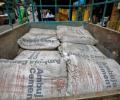
Investors have put money in Ambuja Cements shares as the cement major has moved to consolidate its operations. The Adani Group company has proposed to merge its subsidiaries ACC and Orient Cement into the parent entity.

When missiles fly in this region, they are never just aimed at military targets.

From the 30-Sensex firms, Trent, Infosys, Bharti Airtel, Tech Mahindra, Bharat Electronics and Maruti were among the biggest gainers. However, State Bank of India, Kotak Mahindra Bank, Larsen & Toubro and Titan were the laggards.

Assessing where their funds are flowing gives traders a hidden edge in predicting the market direction and momentum.

Equity mutual funds witnessed an inflow of Rs 35,943 crore in November, marking a drop of 14 per cent on a month-on-month basis, amid heightened volatility in stock markets driven by various macroeconomic factors, geopolitical events and US election results. Despite this, it marked the 45th consecutive month of net inflows into equity-oriented funds, reflecting the growing popularity of mutual funds among investors, according to data from the Association of Mutual Funds in India (AMFI) released on Tuesday.

Indian Oil Corporation's (IOC's) Q2FY26 operating profit of 14,600 crore beat Street estimates and was up 16 per cent on a sequential basis. It surged 287 per cent over the year-ago quarter on account of an improved refining performance.

You can't be the second-most expensive market in the world and deliver just 10 per cent EPS growth, points out Akash Prakash.

Among Sensex firms, Tata Steel jumped the most by 5.90 per cent. Titan, Mahindra & Mahindra, ITC, Eternal, State Bank of India, and Trent were among the other gainers. However, Infosys, NTPC, Hindustan Unilever, TCS, Adani Ports and Bharti Airtel were among the laggards.
